


Kimjang season is approaching. In late autumn, around Ipdong, the traditional start of winter, Koreans get ready for kimjang, making a whole winter's worth of kimchi at once. Kimchi is a side dish that appears on the Korean table every single day, and kimjang, the culture of making kimchi together and sharing it with neighbors, was inscribed on UNESCO's list of the Intangible Cultural Heritage of Humanity in 2013. Kimchi is also named as the Korean food travelers most want to take home, so a trip to Korea this season is a chance to experience kimchi culture up close. This guide walks you through what kimchi is and its main types, then where in Seoul you can make it yourself, buy it and taste it.
Blog
Want to Experience Kimchi in Korea? Your Kimchi Guide
Updated: November 19, 2026
Foreign travelers trying kimjang at Museum Kimchikan

Want to Experience Kimchi in Korea?
Your Kimchi Guide
What should you know first to truly enjoy
kimchi in Korea during kimjang season?
kimchi in Korea during kimjang season?
What is Kimchi
What Is Kimchi?
Korea's Salted, Fermented Vegetables
Korea's Salted, Fermented Vegetables
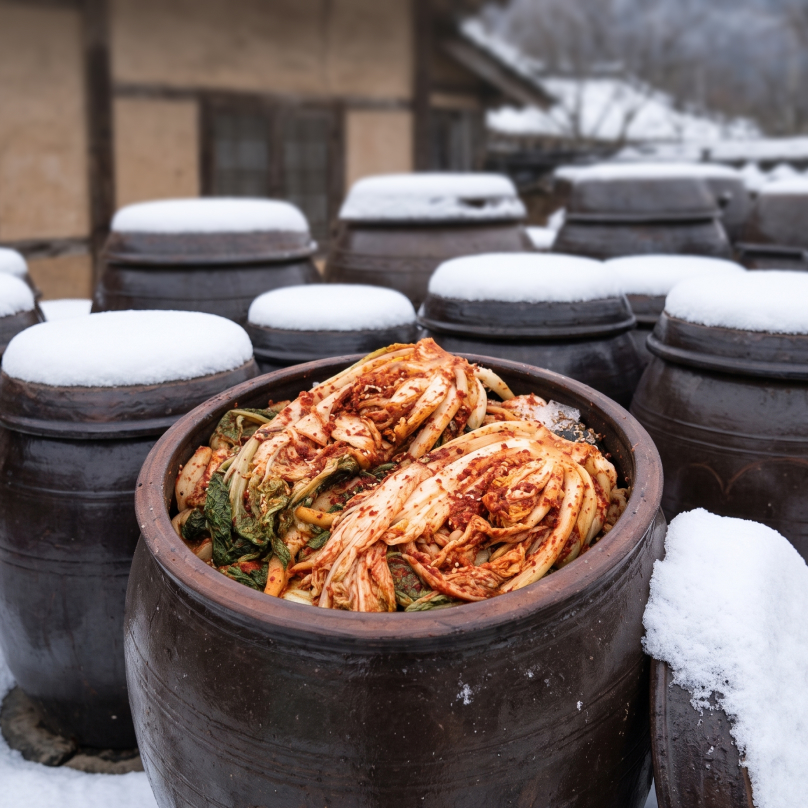
Kimchi is made by salting vegetables such as napa cabbage, radish or cucumber, then fermenting them with seasonings like gochugaru (red pepper flakes), scallions, garlic, ginger and jeotgal (salted seafood). Freshly made kimchi is crisp and bright, but as it ripens over time, it turns tangy and deeper in flavor. That is why Koreans keep kimchi for a long time and cook it again into stews and fried rice. Kimchi is old enough to appear in a poem by Yi Gyu-bo of the Goryeo dynasty, yet the history of today's red kimchi is shorter than you might think. Kimchi made with gochugaru first appears in the records in Jeungbo Sallim Gyeongje (증보산림경제), written in 1766. Making kimchi is itself cultural heritage. "Kimchi-making (김치 담그기)" was designated a National Intangible Heritage of Korea in 2017, and what makes it special is that it is a way of life passed down in homes across the country rather than by particular master artisans. Kimjang is the day this kimchi-making happens on the biggest scale. People chose salt in spring, dried chili peppers and ground them into gochugaru in summer, and made jeotgal in autumn, gathering ingredients for more than half a year. Then, on the threshold of winter, neighbors came together and helped with each other's kimjang through a tradition of shared labor called pumasi (품앗이). It was a big undertaking spread over two days, one for salting the cabbage and one for mixing it with the seasoning.
Types of Kimchi
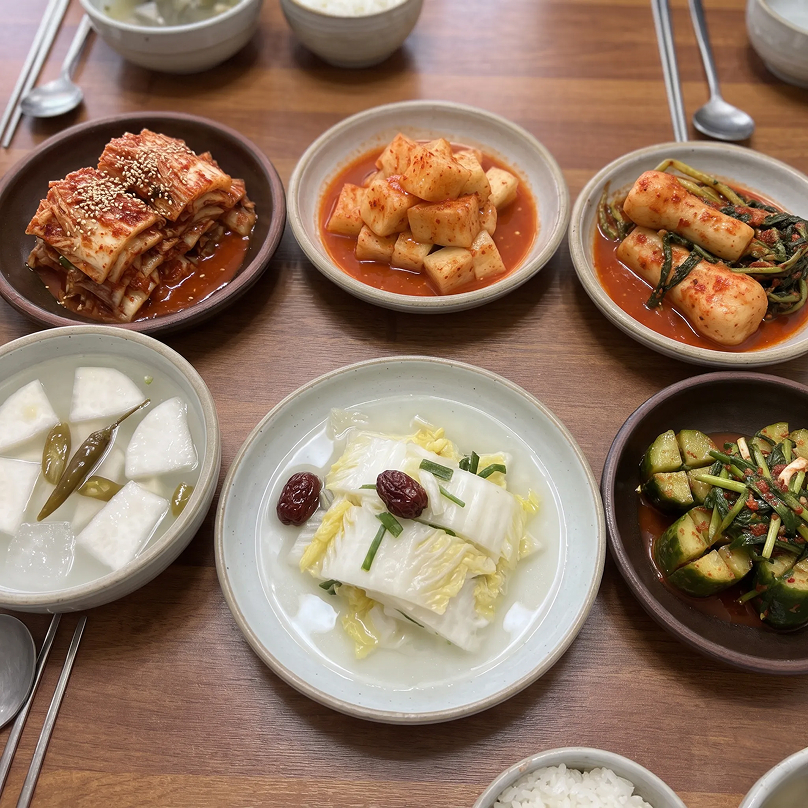
Kimchi comes in many varieties depending on the ingredients and how it is made. Just get to know the signature kinds you will often meet at restaurants during your trip.
Baechu-kimchi (배추김치)
- Salted napa cabbage mixed with seasoning, the star of kimjang
- Enjoy the tender texture of the salted cabbage along with a range of flavors that change as it ferments over time.
Kkakdugi (깍두기)
- Kimchi made with radish cut into cubes
- The sweetness and pungent kick of the radish are the highlight. When you eat seolleongtang (ox bone soup), be sure to add kkakdugi and a splash of its juice.
Chonggak-kimchi (총각김치)
- Kimchi made with young radishes, leafy tops and all
- Its crunchy texture and refreshing taste are so satisfying that you hardly need other side dishes. Try mixing the radish greens into bibimbap, too.
Dongchimi & Nabak-kimchi (동치미·나박김치)
- Water kimchi you enjoy broth and all
- It tastes best well chilled. After samgyeopsal or galbi, Koreans like to refresh the palate with noodles in cold dongchimi broth.
Baek-kimchi (백김치)
- White kimchi made without gochugaru, so it is not spicy
- Even children who are not yet used to spicy food love it, and its gentle sweetness pairs well with the nutty taste of cabbage.
Oi-sobagi (오이소박이)
- Scored cucumbers stuffed with kimchi filling
- Enjoy the cool, refreshing taste of cucumber to the fullest. It is less spicy than regular kimchi, so kids enjoy it too.
Kimchi Class
A Kimchi-Making Class, Museum Kimchikan
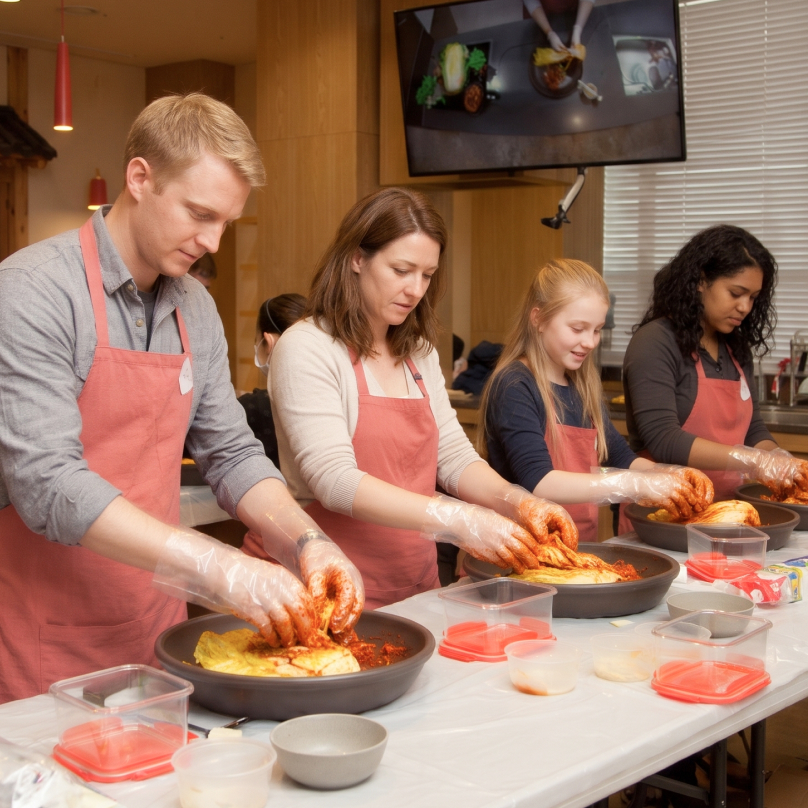
The place to see kimchi up close and make it with your own hands is Museum Kimchikan (뮤지엄김치간) in Insadong. It began in 1986 as a small kimchi museum in Pil-dong, Seoul, reopened in Insadong under its current name in 2015, and that same year was named one of the world's 11 best food museums by CNN. On the 4th floor, you can try a virtual kimjang on a touchscreen and look at the lactic acid bacteria in kimchi through a microscope, and on the 5th floor, Kimchi-um (김치움), you can see many kinds of Korean kimchi in person. The highlight is "Kimchi! Basic," an English-language kimchi class held at Gimjang Maru (김장마루) on the 6th floor. In November and December, the class makes baechu-kimchi in time for kimjang season, and as you lift the salted cabbage leaves one by one to spread the seasoning, the hour flies by. After class, you taste ripened kimchi with tofu and a kimchi pancake, and take the kimchi you made home in a container. Classes run only from Tuesday to Friday and need at least four participants, so book on the website as soon as your schedule is set.
Location
- 뮤지엄김치간(Museum Kimchikan): 서울 종로구 인사동길 35-4 인사동마루 본관 4~6층
Hours
- Tue–Sun 10:00–18:00 (last entry 17:30)
- Closed Mondays, January 1, the Seollal and Chuseok holidays and December 25
Price
- Admission: Adults 5,000 won / Youth (ages 8–18) 3,000 won / Children (36 months–7 years) 2,000 won
- Kimchi! Basic class (admission included): Adults 40,000 won / Youth 38,000 won / Children 37,000 won
Getting There
- Line 1, Jonggak Station (종각역) Exit 3 → 10-minute walk
- Line 3, Anguk Station (안국역) Exit 6 → 10-minute walk
Tip
- Kimchi! Basic (English, 60 min): Tue–Fri 10:00 & 14:00, advance booking on the website required (runs with a minimum of 4 people)
- Cancellations and changes to group size are accepted until 10:59 a.m., 3 days before your visit
- The free audio guide (Korean, English, Japanese, Chinese) plays on your own phone via QR code, so bring earphones
Where to buy
Want to Buy Kimchi?
From the Market to Airport Duty-Free
From the Market to Airport Duty-Free
If you want to enjoy the kimchi you loved back at home, pick one of these two places to fit your itinerary. At the market, you can buy a little of several kinds to compare, and at the airport duty-free shop, you can choose neatly packaged kimchi right before you fly.
The Market Where Locals Bought Kimjang Cabbage,
Kyungdong Market
Kyungdong Market
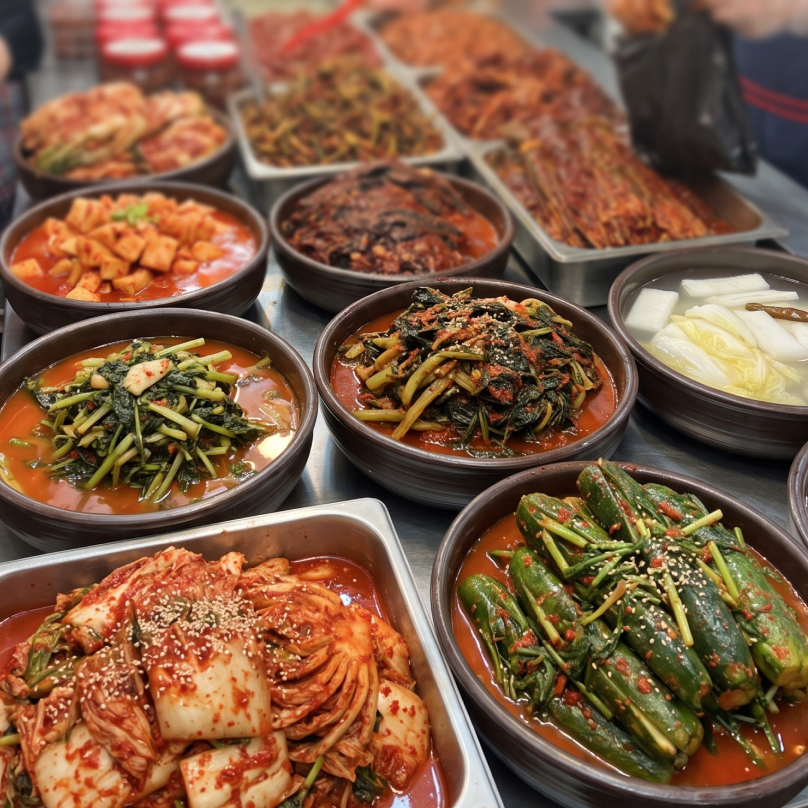
Walk about six minutes from Exit 2 of Jegi-dong Station, and Kyungdong Market (경동시장) begins, with sacks of vegetables, garlic and medicinal herbs piled up endlessly. Opened in 1960, it is one of Seoul's big markets, home to Korea's largest ginseng market and an herbal medicine arcade. Records also show that this Jegi-dong neighborhood was one of the places Seoulites once came to buy cabbage for kimjang. Side dish shops and kimchi shops cluster in and around the market, so you can buy several kinds, such as baechu-kimchi, kkakdugi and chonggak-kimchi, in just the amounts you want. Near the market entrance, there is also a café that keeps the tiered seating of the old Kyungdong Theater, a nice place to rest after shopping. The market is large and its alleys branch off in many directions, so keep a map app open, and if you are curious about a kimchi's name, ask the vendor with a translation app.
Location
- 경동시장(Kyungdong Market): 서울 동대문구 고산자로36길 3
Hours
- Generally 08:30–18:00 (varies by shop)
- Closed every other Sunday
Price
- Free admission
Getting There
- Line 1, Jegi-dong Station (제기동역) Exit 2 → 6-minute walk
Tip
- Many shops close around 6 p.m., so look around before late afternoon
Kimchi to Pick Up Right Before Your Flight,
Airport Duty-Free Shops
Airport Duty-Free Shops
Source: Facebook @GoChinaCindy
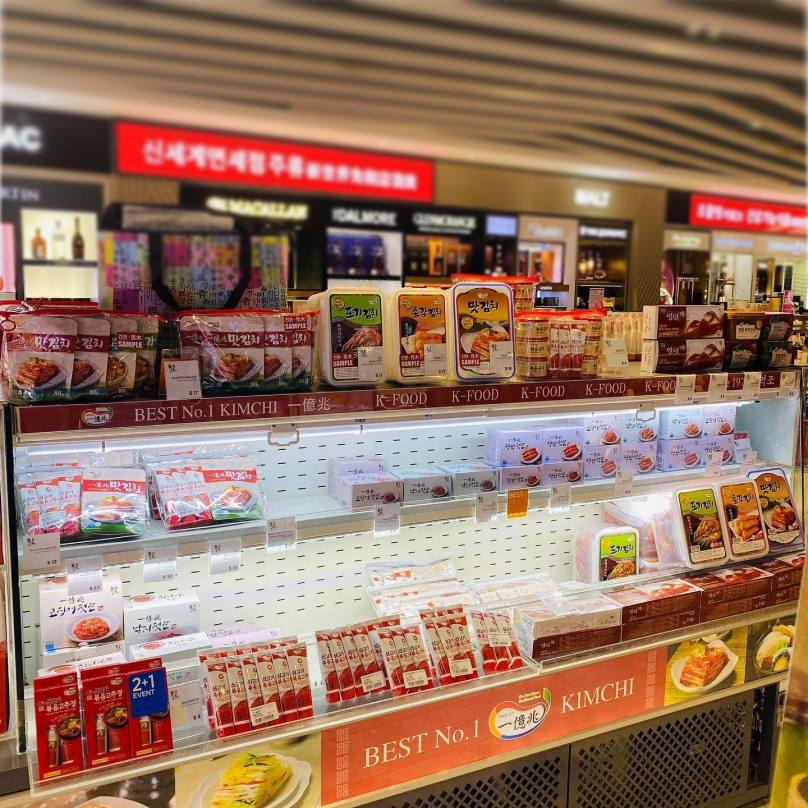
If you haven't bought kimchi by your departure day, make the airport duty-free shop your last chance. In duty-free food sections, you can find kimchi packed to fit nicely in your suitcase, from kimchi made by Korea's luxury hotels, such as Lotte Hotel kimchi and Chosun Hotel kimchi, to brands Koreans love to eat at home, such as bibigo and Pulmuone. Sizes range from small packs you can finish in one sitting to generous pouches, so pick some as gifts and some to enjoy yourself.
Location
- Duty-free food sections in the international departure duty-free area of each airport
Tip
- Available to passengers departing overseas after passport control
- Brands and shop locations may change, so check the website of the duty-free shop you plan to use before departure
Finally, if you plan to take kimchi on the plane, remember that how you pack it depends on where you bought it. According to Incheon Airport's guidance, liquid and gel foods such as kimchi bought at a market or in the city generally cannot be carried onto international flights, except in containers of 100 ml or less placed in a single 1-liter zip-top bag. You can, however, put it in checked baggage, so pack it tightly so the juice doesn't leak and check it in. On the other hand, kimchi bought at a duty-free shop after passport control cannot be checked, so you have to carry it on board. Duty-free purchases can go in the cabin as long as they stay sealed in a tamper-evident duty-free bag for liquids until you reach your final destination. However, restrictions may apply if you transfer at another airport or under your destination country's food import rules, so check with your airline and the shop before you buy.
Where to eat
Want to Taste Kimchi?
Kimjang Bossam and Old-School Kimchi Jjigae
Kimjang Bossam and Old-School Kimchi Jjigae
Kimchi is delicious on its own, but Koreans have long refined the art of enjoying it with dishes that suit it. At long-standing restaurants, try bossam, which began on the festive table of kimjang day, and kimchi jjigae simmered with well-ripened kimchi.
A Kimjang-Day Feast,
Oyster Bossam at Samhaejip in Jongno
Oyster Bossam at Samhaejip in Jongno
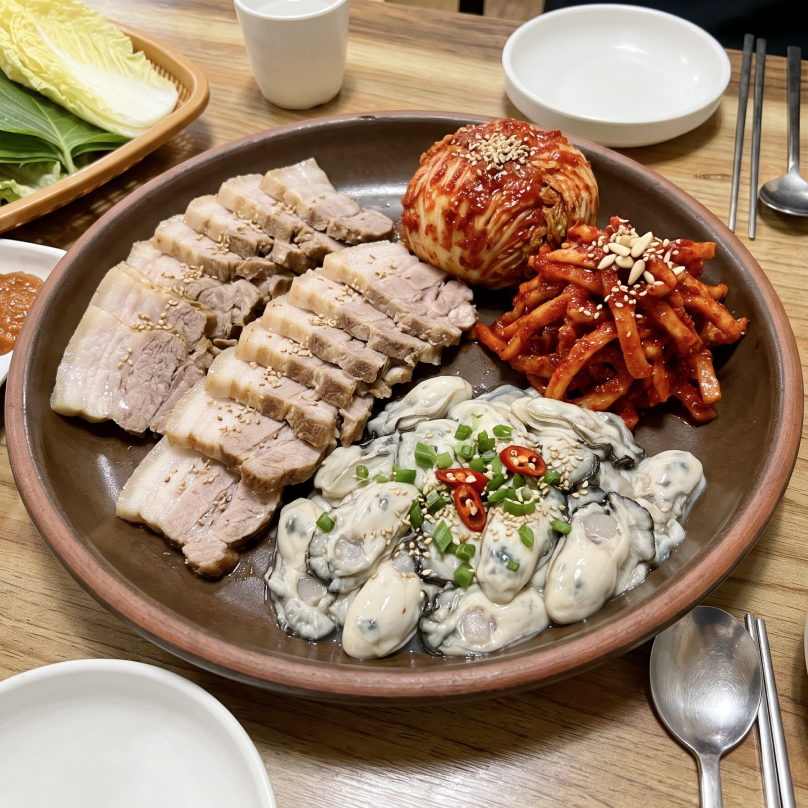
In the old days, when kimjang was done, people boiled pork and wrapped it in tender inner cabbage leaves and kimjang seasoning, holding a feast with the neighbors who had worked so hard. Just before kimjang, oysters for the kimchi were prepared in advance. This old kimjang-day spread is what we now call bossam. Samhaejip (삼해집), in a back alley just two minutes from Exit 15 of Jongno 3(sam)-ga Station, is a long-standing restaurant that has carried on this flavor for nearly 50 years. Its signature oyster bossam comes on one plate: boiled pork with just the right mix of lean meat and fat, fresh oysters and sweet red bossam kimchi. Put an oyster on a slice of pork, wrap it in bossam kimchi and take it in one bite, and nutty richness, the scent of the sea and the sweetness of kimchi spread one after another. The small gamjatang (pork bone soup) served on the house warms you up on a cold evening, and since it stays open until 2 a.m., it is also a good stop for a late dinner.
Location
- 삼해집 종로점(Samhaejip Jongno): 서울 종로구 수표로20길 16-15
Hours
- Daily 10:30–02:00
- Open year-round
Price
- Oyster bossam (small): 32,000 won / Oyster bossam (medium): 40,000 won / Pork bossam (small): 29,000 won
Getting There
- Lines 1, 3 & 5, Jongno 3(sam)-ga Station (종로3가역) Exit 15 → 2-minute walk
Kimchi Jjigae Wrapped in Greens,
Eunjujeong in Bangsan Market
Eunjujeong in Bangsan Market
Source: Naver Blog 먹사남 @ajrtkska
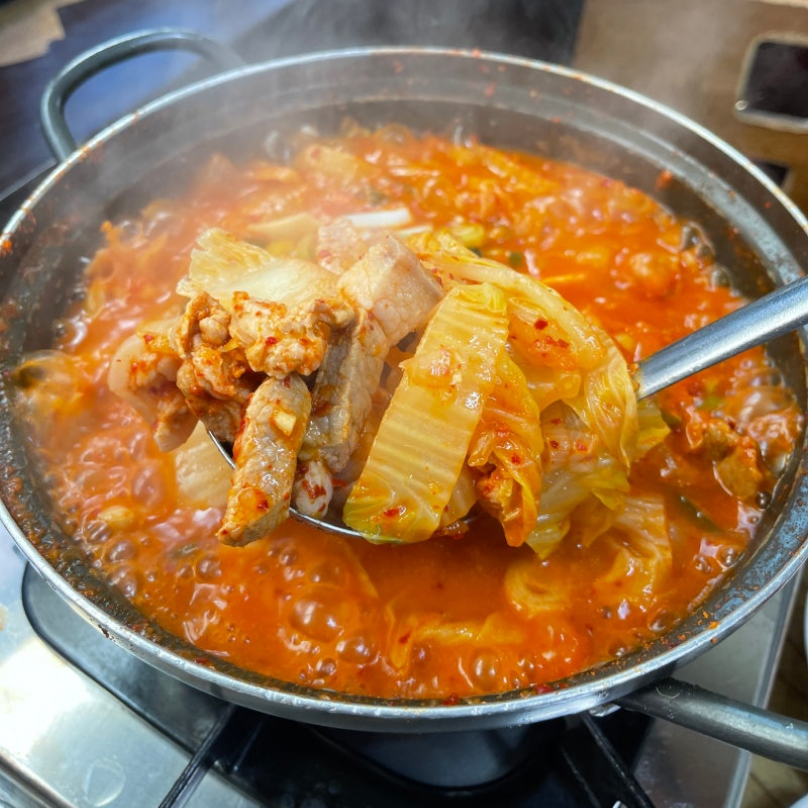
Walk about four minutes from Exit 4 of Euljiro 4(sa)-ga Station into the alleys of Bangsan Market, and you will find Eunjujeong (은주정), which has stood in the same spot since the mid-1980s. Tucked deep in the alley, it is hard to find at first, but its warm old-restaurant atmosphere and unchanging taste keep the customers coming. Its kimchi jjigae is simmered for a long time with well-aged kimchi (mukeunji) and Korean pork, giving it a sharp, spicy kick. The way to eat it is special: mix the stew into your rice, then wrap it in leafy greens together with the pork from the stew. It runs a single menu, kimchi jjigae for wrapping in greens at lunch and samgyeopsal with kimchi jjigae at dinner. Grabbing your own drinks and ramyeon noodles from the vending machine in the corner is also part of the fun here.
Location
- 은주정(Eunjujeong): 서울 중구 창경궁로8길 32 1층
Hours
- Mon–Sat 11:30–22:00
- Closed Sundays
Price
- (Lunch) Kimchi jjigae for wrapping in greens (1 serving): 13,000 won / (Dinner) Samgyeopsal + kimchi jjigae (1 serving): 19,000 won
Getting There
- Lines 2 & 5, Euljiro 4(sa)-ga Station (을지로4가역) Exit 4 → 4-minute walk
Tip
- Lunch (before 5 p.m.) and dinner menus differ, so plan your visit around the menu you want
A single head of kimchi holds half a year of preparation, the helping hands of neighbors and the wish to get through winter together. Baechu-kimchi made at the museum, kkakdugi picked at the market and kimchi jjigae tasted at an old restaurant are all different faces of the same story. Is there a tastier way to learn about a country's winter? This kimjang season, make, buy and share kimchi just like Koreans do, and feel Korea's winter with your hands and your taste buds. Prices may change, so please check the latest information for each shop before you visit. From checking your class booking email and translating kimchi names in market alleys to finding the duty-free shop on departure day, your phone will be busy the whole trip, so make sure reliable, always-on data is ready before you go.
How about it? Are you looking forward to your trip to Korea?
And have you decided what kind of internet to use for your trip? The answer is simple: go with LG U+'s prepaid 5G SIM.
"Conclusion: 5G is simply more convenient during your trip.
And with 010 voice service, your trip to Korea gets even better."
- Feel the speed difference instantly
- Exceptional stability in busy locations
- Enhances the overall experience, from travel documentation and work to navigation
- Beyond data, more varied experiences through 010 voice service for transport, food, and delivery
Enjoy your trip to Korea
even more with LG U+ 5G eSIM
even more with LG U+ 5G eSIM