
 Products
 Orders
 Registration
 Support


What travelers remember most from a trip is often not the scenery, but small moments shared with locals. Korea is no exception. Something as simple as knowing when to take off your shoes, or how to hold your glass when receiving a drink, tells a local, "This traveler respects our culture." None of this calls for grand rules, just a few small things that become natural once you know them. If you have a trip to Korea coming up, here are the basic etiquette tips worth knowing beforehand. Even first-time visitors can travel with peace of mind by keeping just these in mind.
Blog
Best eSIM Picks
8 Korea Travel Etiquette Tips Every Foreigner Should Know
Updated: October 13, 2026
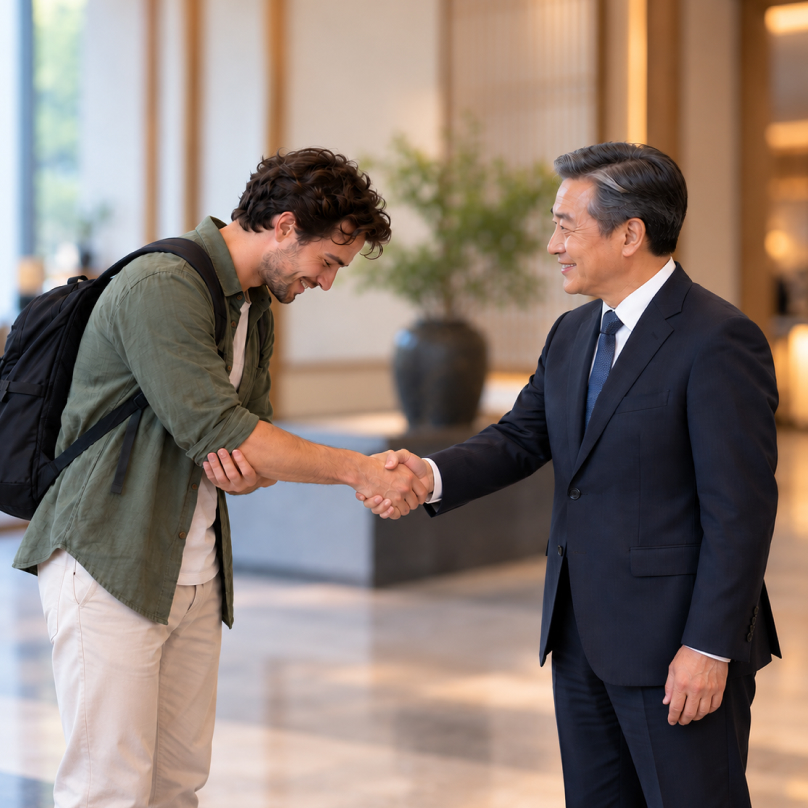
A foreign traveler and a Korean elder exchanging a Korean-style greeting

8 Korea Travel Etiquette Tips
Every Foreigner Should Know
ETIQUETTE #1
Knowing Where to Take Off Your Shoes
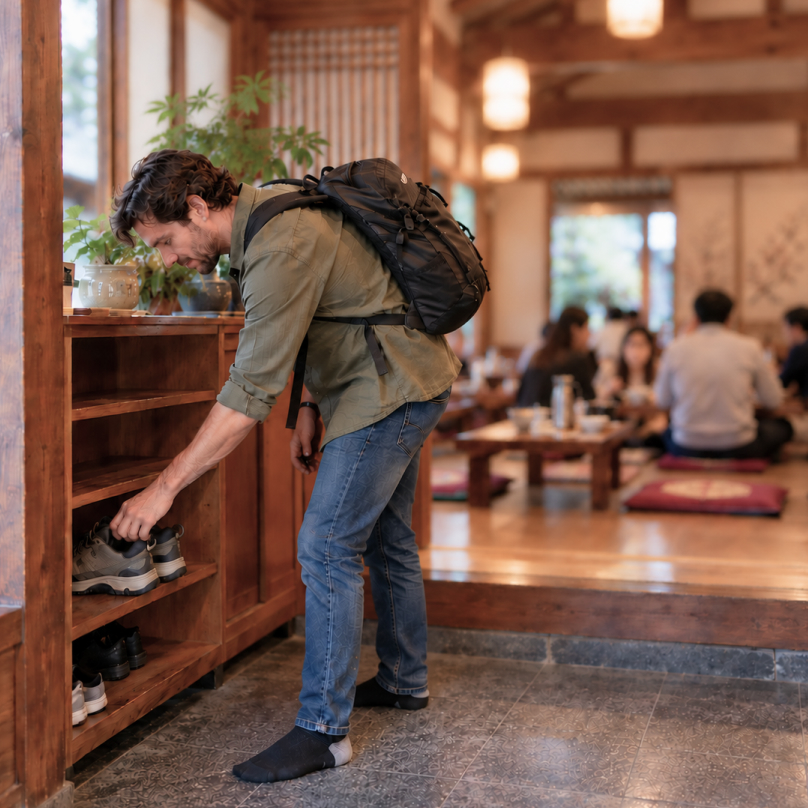
Taking off your shoes is standard in private homes, hanok guesthouses and hanok cafes, temples, and traditional restaurants with ondol (heated floor) seating. If you see a shoe rack at the entrance or notice the floor rising a step higher, take that as your cue to remove your shoes. Most cafes, restaurants, and shops, on the other hand, welcome guests with their shoes on, so a quick glance at the entrance is usually all you need.
Since you'll likely be taking your shoes on and off often, it helps to pack clean, hole-free socks and shoes that slip on and off easily, like loafers. A little preparation like this makes every moment of the trip that much more comfortable.
ETIQUETTE #2
Basic Manners to Keep in Mind at Mealtimes
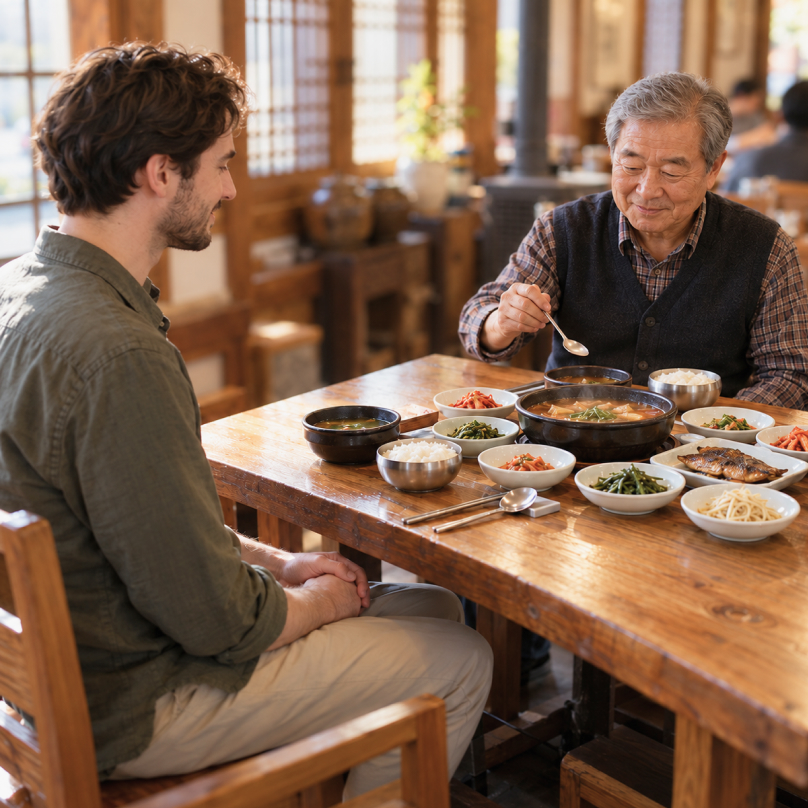
Korean Dining Etiquette
One of the most commonly cited rules at Korean restaurants is never sticking your spoon or chopsticks upright in a bowl of rice. It resembles how food is arranged for ancestral memorial rites, so it's customary to avoid doing so during an everyday meal. Unlike in some Western or other Asian cultures, rice and soup bowls are left on the table rather than lifted, and eaten with a spoon instead.
When dining with a group, it's considered polite to wait until the eldest person at the table picks up their utensils before starting to eat. It also helps to remember to pick up side dishes cleanly in one motion rather than poking around with your chopsticks. Blowing your nose at the table is best avoided as well. These may seem like small details, but this kind of consideration makes the meal more comfortable for everyone.
Is There No Tipping Culture in Korea?
Korea doesn't have a tipping culture. Whether at a restaurant or a cafe, the price on the menu already includes VAT and service charge. If you leave cash on the table as a tip, it's actually common for staff to run after you and say, "Excuse me, you left your money!" A polite word of thanks is welcomed far more warmly than a tip.
ETIQUETTE #3
Two-Handed Etiquette at the Drinking Table
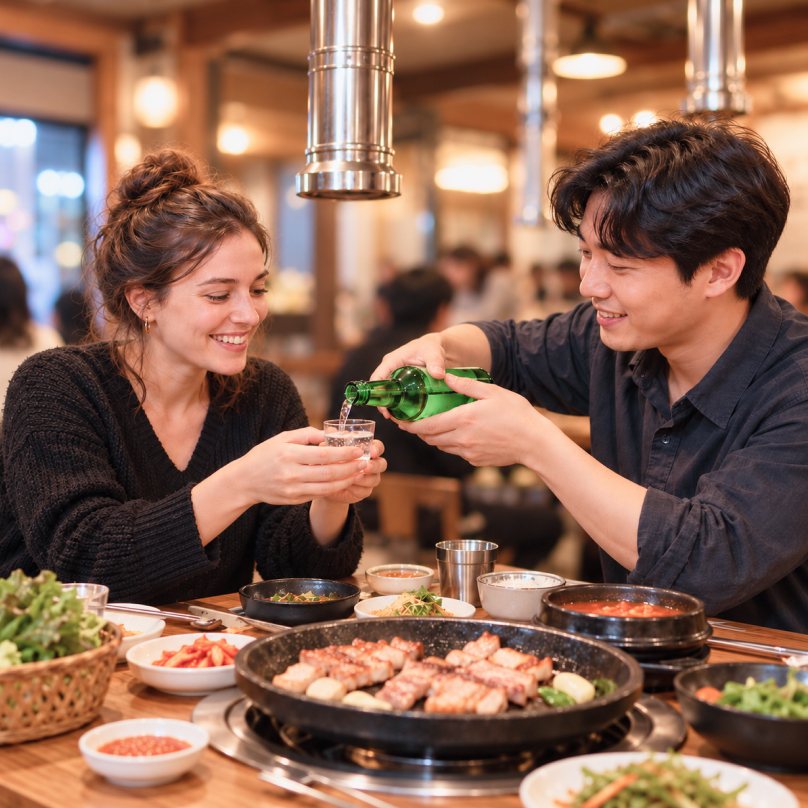
Drinking in Korea has its own rhythm. The basic rule is that you don't pour your own drink, you pour for others, and they pour for you. When pouring for someone older, hold the bottle with both hands, and when receiving a drink from someone older, hold your glass with both hands as well.
It's also common to see people turn their head slightly to the side when drinking in front of an elder. If you'd like to decline a drink, rather than refusing outright, you can politely signal it by covering your glass lightly with your hand or sipping slowly. Once you know this one rhythm, drinking with locals will feel much more natural, even if the custom is unfamiliar at first.
Tip
- In Korea, people love clinking glasses together whenever they drink. When they do, they say "geonbae," meaning it's time to empty your glass.
ETIQUETTE #4
Two Hands: The Etiquette Behind Greetings and Giving Things
It's also common to see people turn their head slightly to the side when drinking in front of an elder. If you'd like to decline a drink, rather than refusing outright, you can politely signal it by covering your glass lightly with your hand or sipping slowly. Once you know this one rhythm, drinking with locals will feel much more natural, even if the custom is unfamiliar at first.
ETIQUETTE #5
Manners to Keep on Public Transportation
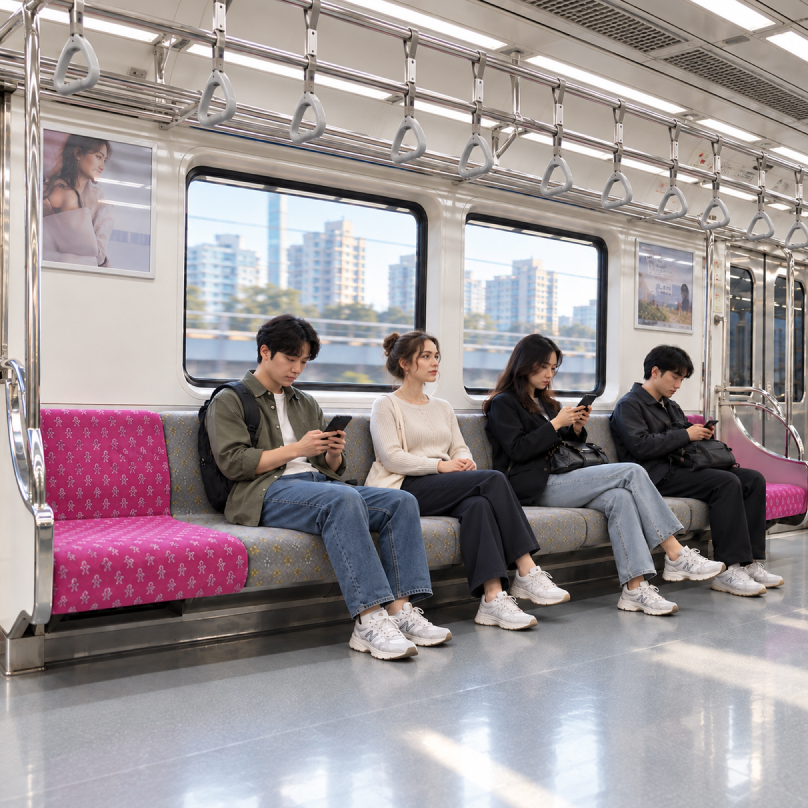
Consideration for Those Who Need It Most
Subways and buses have designated seats for the elderly and disabled, as well as separate priority seats for pregnant passengers. Priority seats for the elderly and disabled are meant to be left open, or given up when someone who needs them boards. On the Seoul subway, priority seats for pregnant passengers are marked in pink, located at both ends of the center seating section, two seats per car. Seoul City began operating these seats in 2013 in response to the country's low birth rate, and they can now be found across the entire Seoul subway network, including Lines 1 through 9. They're easy to spot thanks to the emblem and floor markings, so it's best to leave them open even if they appear empty.
Keep Your Voice Down on Public Transit
On public transportation, it's best to keep phone calls short and quiet or use earphones, and avoid eating if possible. Korea in particular tends to be notably quiet on public transit. Silence is more familiar than conversation, whether on the morning subway commute or on the bus, so keep calls and conversations brief and soft-spoken. These small courtesies add up to a more comfortable ride for everyone.
ETIQUETTE #6
Queueing: A Culture With No Cutting in Line
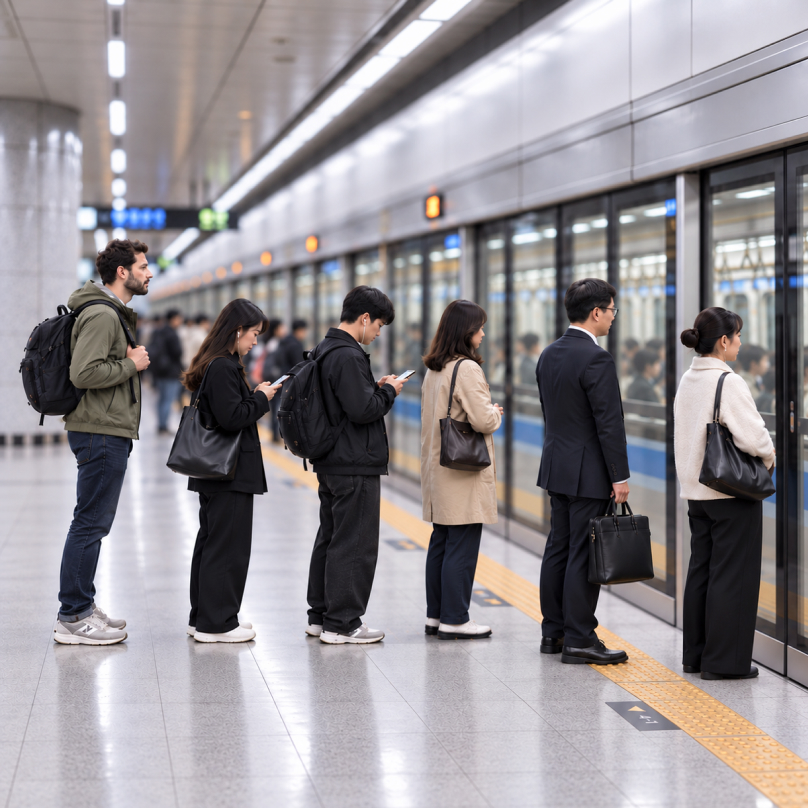
From subway platforms to ticket counters to the entrance of a popular restaurant, waiting in line is simply part of everyday life in Korea. This culture began to take hold in the late 1990s through government and civic campaigns, and became firmly established following the 2002 FIFA World Cup Korea/Japan. Cutting in line may seem like a minor slip, but it's seen as inconsiderate and draws disapproving looks, so if you see a line, joining the back of it is always the safest choice.
On escalators, you may notice people standing in a single line and leaving one side open, but in practice, the more important rule is holding the handrail and not walking or running, for safety reasons. Korea's Elevator Safety Management Act, revised in 2019, also states that passengers should not walk or run on a moving escalator.
ETIQUETTE #7
Smoking Only in Designated Areas
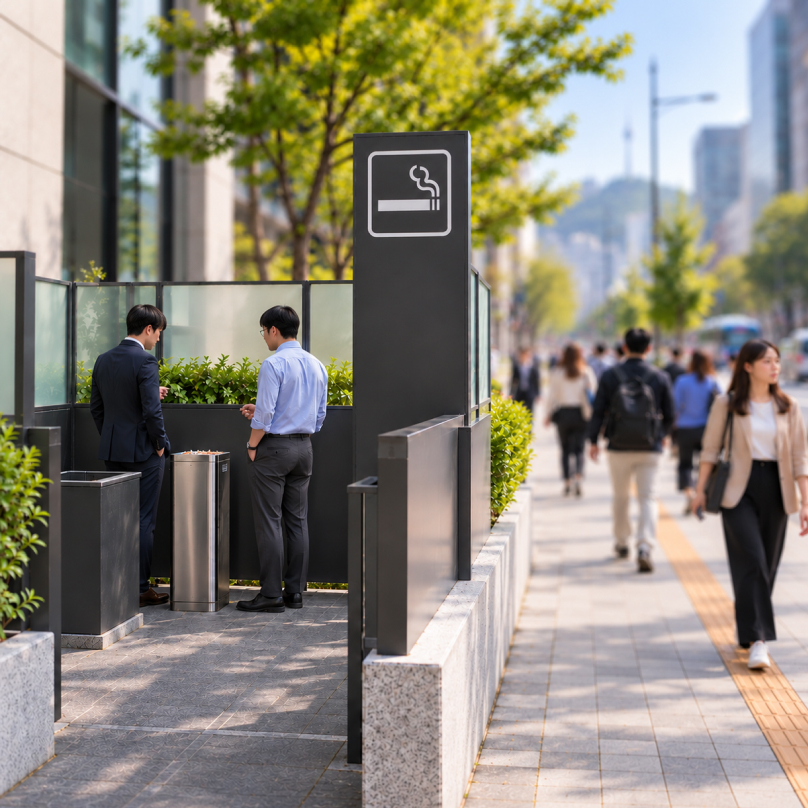
In Korea, schools and playgrounds, hospitals and public health centers, daycare centers and youth facilities, government offices and libraries, large stores, train stations and airports, and every restaurant and cafe (fully enforced since January 2015) are all designated no-smoking zones by law. Local ordinances sometimes extend no-smoking zones further, to bus stops, parks, or public squares, so it's a good idea to check nearby signage before lighting up on the street.
Tip
- Smoking in a no-smoking zone can result in a fine of up to KRW 100,000. Instead, look for one of the designated smoking areas or smoking booths set up around the city.
ETIQUETTE #8
Etiquette for Visiting Temples and Palaces
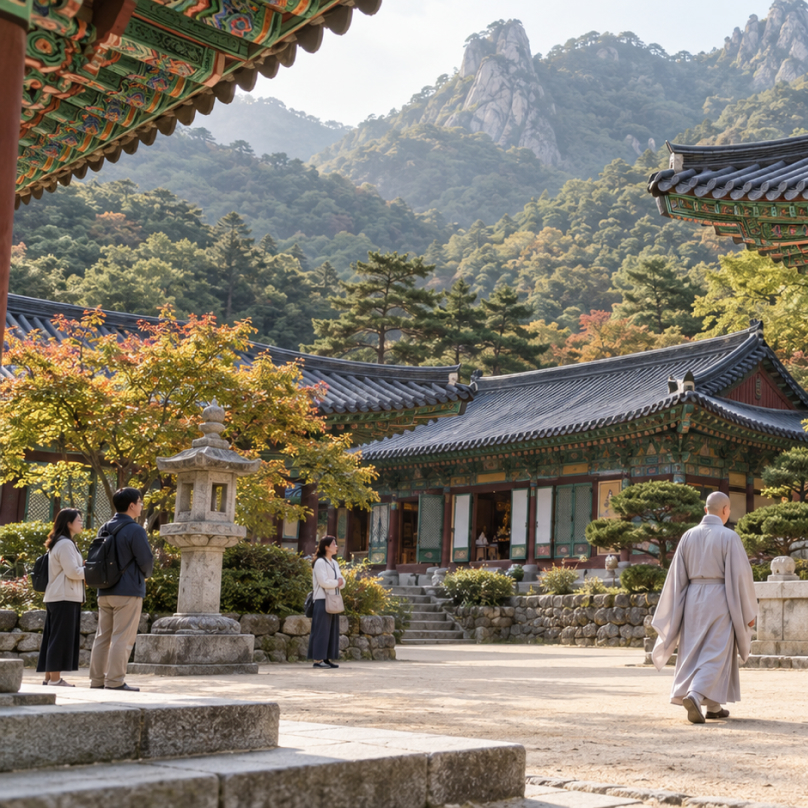
When visiting temples and palaces, modest clothing that covers the shoulders and knees is recommended. Inside the main hall, keep quiet, avoid stepping over people who are bowing or seated, and don't point your feet toward a Buddha statue or another person. Before taking photos, check for any signage indicating that photography is not allowed inside the hall.
The moment you take off your shoes, the moment you receive a glass with both hands, the moment you join the back of a line, these eight habits are, in the end, simply the way Koreans have long looked out for one another, and a way for travelers to naturally blend into that spirit of consideration. They may feel unfamiliar at first, but they're simple enough to pick up within a day or two, so why not ease into them one at a time? To avoid feeling flustered by an unfamiliar custom while traveling, having internet access you can rely on for a quick search in the moment makes a real difference. Checking a temple's location on a map app, reading signage through a translation app, looking up an etiquette question on the spot, all of these moments depend on a stable, uninterrupted data connection.
How about it? Are you looking forward to your trip to Korea?
And have you decided what kind of internet to use for your trip? The answer is simple: go with LG U+'s prepaid 5G SIM.
"Conclusion: 5G is simply more convenient during your trip.
And with 010 voice service, your trip to Korea gets even better."
- Feel the speed difference instantly
- Exceptional stability in busy locations
- Enhances the overall experience, from travel documentation and work to navigation
- Beyond data, more varied experiences through 010 voice service for transport, food, and delivery
Enjoy your trip to Korea
even more with LG U+ 5G eSIM
even more with LG U+ 5G eSIM